
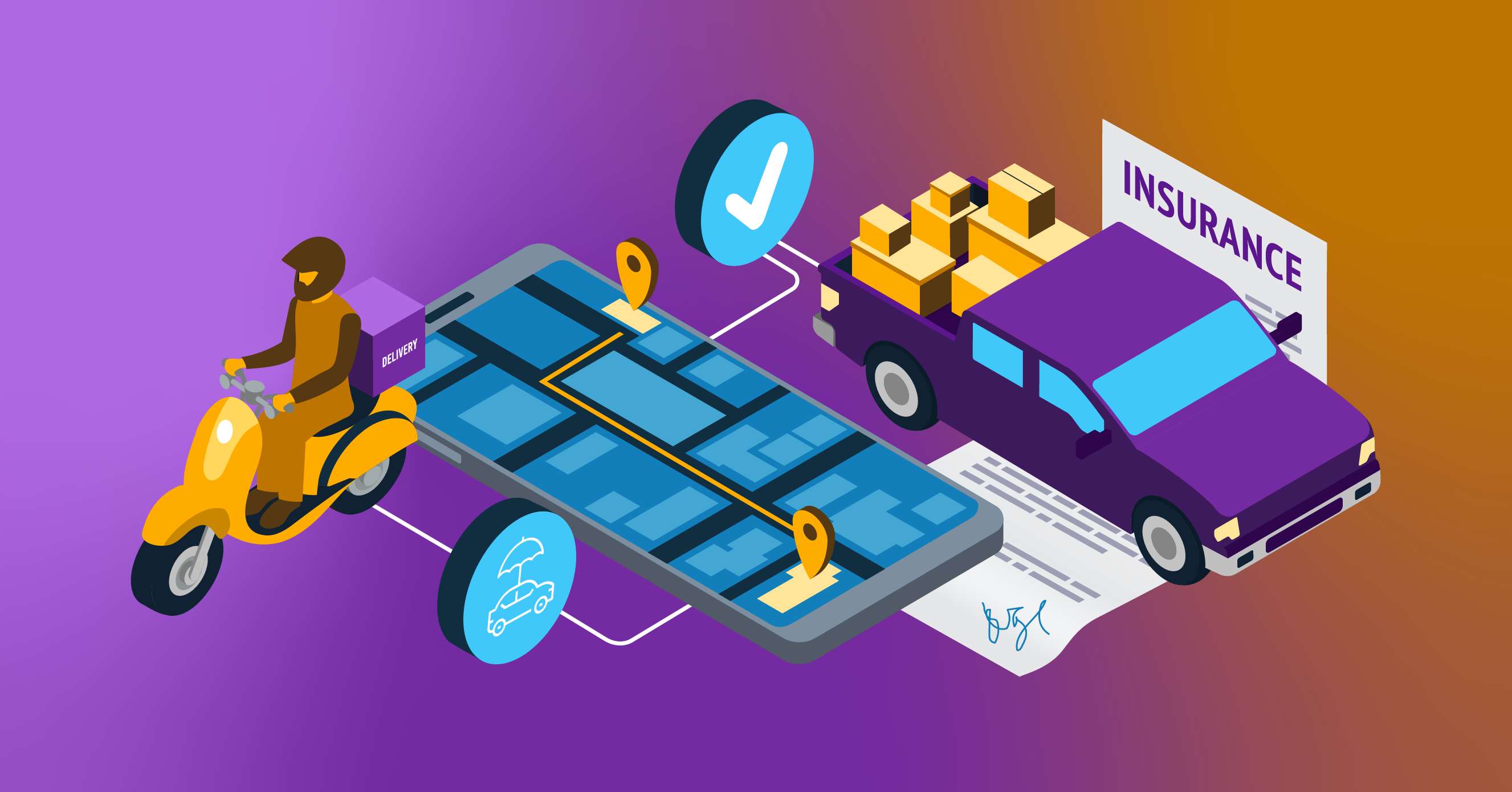
In the gig economy, verifying a driver’s personal auto insurance once at onboarding is not enough. With high turnover, variable work patterns, and evolving risk exposure, gig companies need continuous coverage monitoring to protect themselves, their workers, and their customers.
Why continuous monitoring matters in the gig economy
The demand for ongoing insurance verification mirrors the larger evolution of the gig economy itself, where operational efficiency, safer onboarding, and real-time risk management have become central to running a modern driver network. The trends are clear.
Growth in last-mile delivery demand: High turnover + high activity = elevated risk
Gig driver networks are characterized by high turnover: drivers join and leave frequently, often shifting between platforms or stepping away temporarily. That creates a moving target for compliance and risk management.
Moreover, drivers in gig networks often operate under high-pressure conditions: tight delivery schedules, long hours, and frequent stops or starts. A recent systematic review of “last-mile delivery” workers found significant safety, health, and psychosocial risks associated with this work model — from fatigue and burnout to elevated crash risk.
In such an environment, even a small number of uninsured or underinsured drivers can lead to disproportionate liability and safety exposure.
Adding to the problem: newer research shows that high turnover in commercial driving correlates with increased crash risk.
One-time checks leave gig platforms vulnerable
Many gig platforms today treat insurance verification as a one-time checkbox during onboarding. But that approach misses a core truth: insurance coverage is fluid, not static. Drivers may change insurers, lapsed coverage may go unnoticed, or a driver may sell their car — yet continue logging miles under a platform’s name.
- 14% of drivers are uninsured as of 2022, and that rate is expected to rise as insurance rates get more expensive.
- Standard personal auto policies often don’t extend to business or commercial use, which many gig drivers engage in.
- For gig platforms relying on large, constantly shifting driver pools, from food delivery to last-mile logistics, the odds of coverage gaps increase over time.
Thus, relying solely on an initial verification creates a false sense of security. Onboarding checks must be complemented with ongoing monitoring to track changes and maintain compliance.
Auto insurance is never one and done
For gig companies, insurance is a dynamic liability that requires constant vigilance for a variety of reasons.
Coverage gaps can emerge unexpectedly, even among drivers who were fully insured at onboarding. A worker may change insurers, let a policy lapse, or overlook the need for business-use endorsements. These changes all can occur without alerting the platform. At the same time, gig companies face constant churn: drivers come and go quickly, and with such high onboarding and offboarding volumes, a single verification snapshot can’t keep up with workforce changes that unfold week to week.
These operational realities are compounded by evolving behavioral and safety risks. The longer drivers spend on the road, particularly under pressure, fatigue, or tight delivery timelines, the greater the likelihood of accidents or violations. And when incidents do occur, the regulatory and reputational consequences are significant. An uninsured driver, or even one whose policy doesn’t cover commercial activity, can expose gig companies to legal liability, financial loss, and lasting brand damage. Continuous monitoring helps mitigate these risks before they escalate.
5 ways to implement continuous coverage monitoring
- Integrate monitoring into your driver lifecycle. It's not enough to do it only at onboarding. Use tools and APIs to prompt periodic insurance checks or trigger checks when platform status changes (e.g., driver becomes active again after a break). Re-verification, or monitoring, should be part of the standard delivery/ride-share operations.
- Use automation wherever possible. The manual checking of insurance coverage via email calls to insurers quickly becomes untenable at scale. Platforms like MeasureOne enable instant, source-verified data retrieval via API and AI, reducing administrative burden while improving accuracy.
- Establish triggers for alerts. For example: insurance expiration date approaching, policy cancellation, changes in coverage type (from commercial to personal), or driver inactivity/reactivation after a hiatus.
- Align insurance policy requirements with gig work realities. Ensure your platform’s required coverage accounts for business use, not just personal driving. Many drivers may unknowingly rely on personal insurance that excludes work-related activities; continuous monitoring helps catch these gaps.
- Communicate with drivers clearly. Make clear at onboarding — and regularly iterate — what coverage is required, why ongoing verification matters, and what happens if coverage lapses. Building transparency supports compliance and driver trust (and avoids surprises during incidents).
The benefits of continuous monitoring for gig companies
With automated tools like MeasureOne’s insurance monitoring API, gig platforms can stay ahead of coverage gaps and protect their drivers, customers, and brand. Continuous coverage monitoring offers several clear advantages over one-time checks:
- Ongoing risk mitigation: Regular insurance monitoring can immediately flag lapses or changes in coverage, allowing the company to intervene before incidents occur.
- Compliance and legal protection: Many states and regulations require active insurance coverage, especially when drivers are performing commercial tasks. Continuous monitoring helps ensure compliance throughout a driver’s tenure, not just at the start.
- Operational consistency and trust: Continuous coverage verification fosters trust and can become a competitive differentiator.
- Administrative efficiency and scale: Using automated integrations can automate auto insurance verification and re-verification, eliminating manual review and reducing friction.
Rely on tech automation to monitor your drivers’ auto insurance coverage
Automation is the key to streamlining the insurance verification processes, making it more efficient and accurate, which ultimately benefits both gig workers and the companies that hire them.
MeasureOne brings you automated auto insurance verification and insurance monitoring APIs for rideshare and delivery drivers instantly, all while prioritizing compliance and safety. With our automated solutions, your team can improve your onboarding processes and protect your business.
MeasureOne is here to help. Get started for free.